In the digital age, survival is no longer just about having a great product; it's about keeping up with technological velocity. In the past, bringing a business idea to life required complex software processes, massive budgets, and months of development cycles. Today, the rules of the game are changing. At Xpoda, we are focusing on a revolution at the heart of this shift: No-Code.
In this guide, we will explore how organizations are building robust, enterprise-grade software without traditional development teams, how this democratizes digital transformation, and how you can lead this process with Xpoda.
1. What Is No-Code? A Conceptual Overview
No-Code, in its simplest terms, is a software development method that allows you to create software applications, websites, or automation systems without needing to write a single line of code. These platforms transform complex programming languages into visual building blocks.
The traditional software development process is akin to an architect carving every single brick by hand. No-Code, however, is like assembling high-quality, pre-fabricated modules to build a massive structure in a fraction of the time. Platforms like Xpoda use "drag-and-drop" interfaces, ready-made templates, and visual logic flows to turn software development from a "technical skill" into a "creative process."
No-Code vs. Low-Code
A frequently confused concept is Low-Code.
Low-Code: Generally designed to speed up the work of professional developers; it requires at least some coding knowledge for custom scripts.
No-Code: Aimed entirely at non-technical users (Citizen Developers). Even if you know no programming languages, you can build complex business processes on Xpoda that previously required a full engineering team.
2. Why Now? The Rise of No-Code for Enterprises
The global shortage of software developers is growing every day. In an era where every company is becoming a software company, relying solely on IT departments slows down innovation. Here is why enterprise-level No-Code has become a necessity:
Speed-to-Market: An MVP (Minimum Viable Product) development process that takes 6 months with traditional methods can be reduced to a few weeks with Xpoda.
Cost Efficiency: It reduces the need for large software teams and significantly lowers the Total Cost of Ownership (TCO) for custom software.
Agility: When market conditions change, you don't need to wait for a software sprint to update your app; you can make changes instantly to reflect new business rules.
Reduced Error Margin: Since visual blocks are already tested structures, "syntax" errors resulting from manual coding are eliminated, ensuring more stable enterprise environments.
3. Why No-Code Is the Future of Mobile and Web App Development
The landscape of application development is shifting from "code-first" to "experience-first." No-code is not just a temporary solution; it is the future of how digital products are built for several reasons.
Cross-Platform Mastery
In the past, building a web app and a mobile app required separate codebases and specialized developers for each. Modern no-code platforms like Xpoda allow you to build once and deploy everywhere. This "native feel" across both web browsers and mobile devices ensures a consistent user experience without doubling the development effort.
Bridging the Gap Between Design and Function
Traditionally, designers and developers worked in silos, often leading to a "lost in translation" effect. No-code merges these two worlds. What you see in the visual editor is exactly what the user gets. This immediate feedback loop ensures that the final product remains true to the original vision while remaining fully functional.
Adaptive and Scalable Architecture
As mobile and web standards evolve, no-code platforms handle the underlying technical updates automatically. This means your enterprise applications stay modern and compatible with the latest devices and browsers without requiring manual maintenance or costly refactoring.
4. Workflow Automation Made Simple: Streamlining Business Processes
The true power of No-Code lies in its ability to simplify complex business logic. Workflow automation—once a daunting task for IT teams—is now accessible to anyone with a clear understanding of their business needs.
Eliminating Manual Bottlenecks
Every organization has repetitive tasks: data entry, approval routing, status updates, and notification triggers. These manual processes are not only slow but prone to human error. Xpoda allows you to map these workflows visually. By automating these "micro-tasks," employees can reclaim their time for high-value strategic work.
Seamless Cross-Departmental Flows
Digital transformation fails when data is trapped in silos. No-Code platforms facilitate "streamlining" by ensuring information moves seamlessly between departments—from sales to finance, and from operations to HR—without the need for manual intervention or custom-coded bridges.

5. Turning Complex Data into Actionable Insights: No-Code BI & Reporting
One of the most significant advantages of modern no-code platforms is the democratization of data. Traditionally, creating a comprehensive business report required specialized data analysts and complex SQL queries.
Real-Time Visualization
With Xpoda, you can build dynamic dashboards that pull data directly from your operational processes. Instead of waiting for end-of-month reports, decision-makers can view real-time KPIs through visual charts, heatmaps, and progress bars. This instantaneous feedback loop allows for proactive rather than reactive management.
From Raw Data to Strategy
No-code BI tools allow users to filter, group, and drill down into complex datasets with simple clicks. By turning "raw data" into "actionable insights," business leaders can identify trends, forecast demands, and uncover hidden inefficiencies without ever touching a line of code.
6. The Role of No-Code in Digital Transformation
Digital transformation is not just about moving paper-based tasks to a computer; it is about fundamentally changing the way business is done. No-Code serves as the "fuel" for this transformation.
Empowering Business Units
The person involved in the work is the one who knows the problem and the solution best. Thanks to No-Code, marketing specialists, operations managers, and HR directors can design their own solutions instead of "opening a request" with the IT department. Xpoda spreads corporate innovation to the grassroots by granting this freedom to business units.
Data Integration and Automation
The biggest hurdle in digital transformation is data silos. No-Code platforms allow data to flow fluidly by bringing different tools together via APIs. Manual Excel entries are replaced by automated workflows designed on Xpoda, creating a "Single Source of Truth" for the enterprise.
7. No-Code with Xpoda: A Practical Implementation Guide
When choosing a No-Code platform for an enterprise, the most critical point to consider is how flexible the platform is. Xpoda allows its users to build not just simple forms, but complex enterprise-grade applications including ERP and CRM systems.
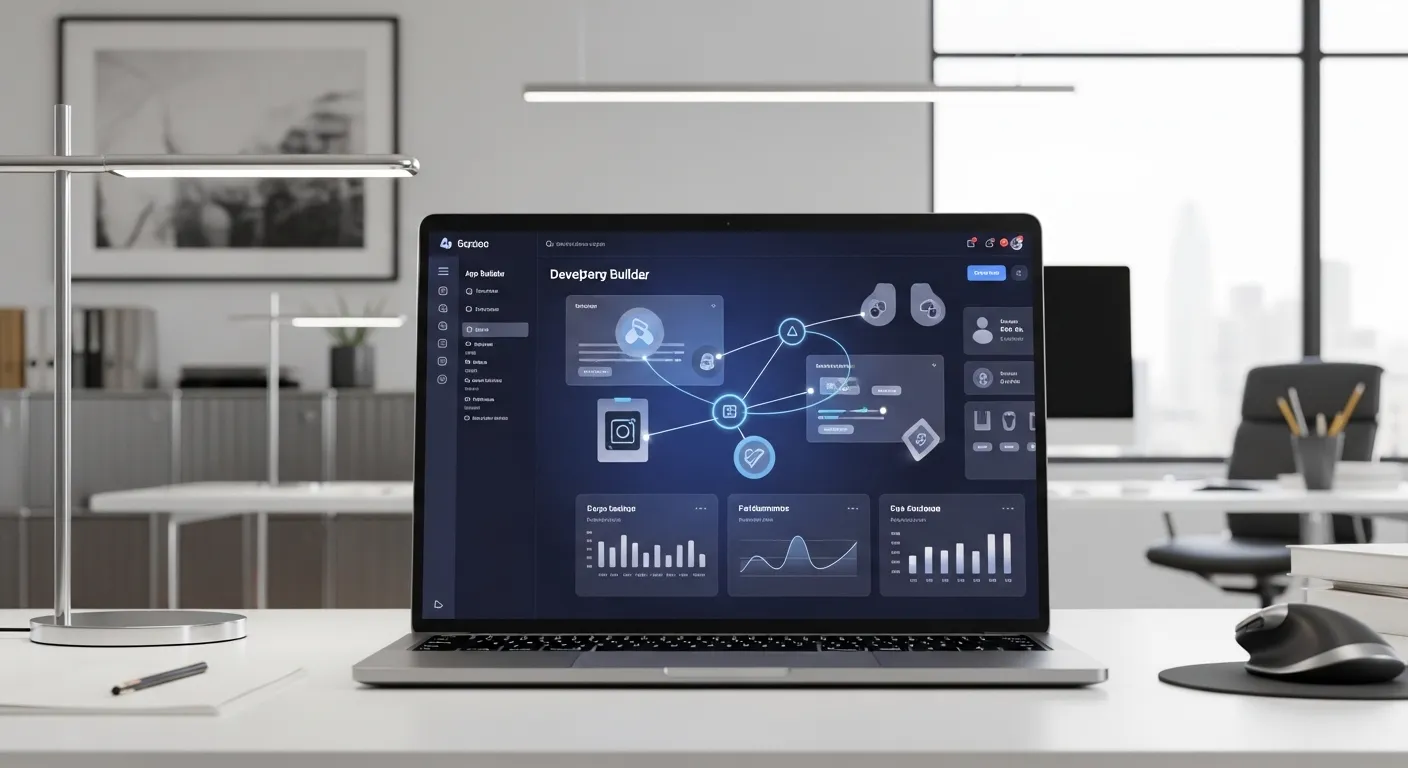
How Does the Process Work in Xpoda?
Needs Analysis: Identify the business bottleneck. Is it a custom ERP module, inventory tracking, or a global customer portal?
Building the Data Structure: What data will your application store? Define your relational databases and tables visually without needing SQL knowledge.
Interface Design: Create modern, responsive (mobile-compatible) screens with drag-and-drop components that adhere to your corporate branding.
Logic Creation: "If this budget exceeds $10k, route for CFO approval; otherwise, process payment." Construct complex business logic using visual flow diagrams.
Deployment and Scaling: Go live with a single click across the organization. Scale horizontally as your user base grows without worrying about infrastructure management.
8. Application Areas of No-Code
Regardless of your industry, No-Code offers enterprise solutions:
Finance: Real-time approval mechanisms, expense management, and automated budget reporting.
Healthcare: Secure patient tracking systems and HIPAA-compliant management portals.
Retail: End-to-end inventory tracking and global supply chain visualization.
Education: Large-scale student registration systems and LMS (Learning Management) platforms.
9. Common Myths and Facts
Certain prejudices about No-Code still persist. Let’s clarify them from the Xpoda perspective.
Myth 1: "No-Code is only for simple applications." Fact: Advanced platforms like Xpoda can support complex ERP-like (Enterprise Resource Planning) systems with thousands of users and millions of data rows. The limit is your imagination, not the tool.
Myth 2: "It is not secure." Fact: On the contrary, No-Code platforms possess enterprise-level security protocols (SSL, SOC2 compliance, data encryption, granular authorization). They prevent security vulnerabilities that might be overlooked in manual coding through standardized, secure frameworks.
Myth 3: "It will take jobs away from developers." Fact: No-Code does not eliminate developers; it liberates them. Developers can now focus on the company's core value-added projects that require high-level engineering, while the business teams handle the operational apps.
10. Future Outlook: The Era of the "Citizen Developer"
According to Gartner, by 2024, more than 65% of application development activity in large organizations will be done with low-code/no-code tools. This is not just trend; it is a structural shift toward the "Citizen Developer."
These professionals develop applications to meet business needs despite having no formal technical training. Xpoda is the most powerful weapon for this new generation of professionals. The success of a company’s digital transformation will be measured not by the size of their IT budget, but by the number of "solution-producing employees" they possess.


